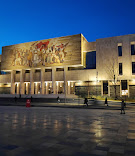
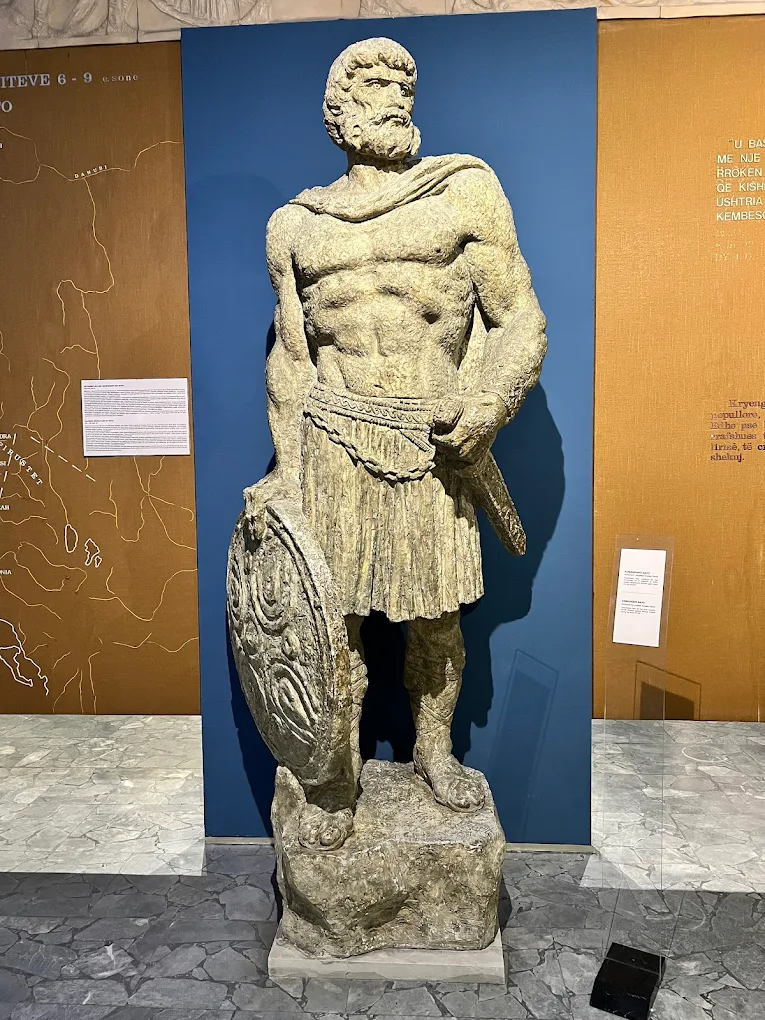
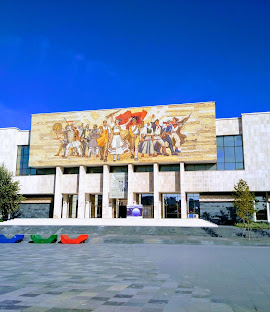
National Historic Museum was inaugurated on 28 October 1981. It is the biggest Albanian museum institution. Pavilion starting from the Paleolithic Period to the Late Antiquity, in the 4th century A.D., with
almost 400 first class objects.
The Middle Age Pavilion, with almost 300 objects, documents clearly the historical transformation process of the ancient Illyrians into early Arbers. This pavilion reflects the Albanian history until the 15th century. Other pavilions are those of National Renaissance, Independence and Albanian State Foundation, until 1924. The Genocide Pavilion with 136 objects was founded in 1996. The Iconography Pavilion with 65 first class icons was established in 1999. The best works of 18th and 19th century painters are found here, like Onufër Qiprioti, Joan Çetiri, Kostandin Jermonaku, Joan Athanasi, Kostandin Shpataraku, Mihal Anagnosti and some unknown authors.
In 2004 the Antifascism Pavilion 220 objects was reestablished. In 2005 Albanian Ethnography pavilion was added in one of Museum halls with 250 objects. Among the most impressive values of the above-mentioned pavilions is the evidence of prehistoric culture in Albania, Archaic Period and pre-urban Illyrian period, Illyrian period and many objects relating to the intertwining of Greek and Roman cultures. The bronze and silver plaque in a mythological scene, found at Selcë monumental graves of the 3rd
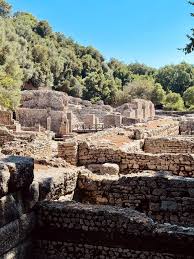
century B.C., some classical period sculptures coming from Durres and Apollonia, many wonderful terracotta and bronze works, the marble head of Apollon of the 1st century A.D, a Praxiteles relic, found in Butrint and known with the conventional name Dea of Butrint. A limestone man’s head of the 4th century from Durres, in the boundaries of Roman Imperial art and Byzantine art, Lepidia’s Stele of the 3rd century A.D. from Durres, representing the ethnographic Illyrian clothes and many gravestones called kioliske of Illyrian anthroponomy.
In the ancient period, special is the extraordinary value of wonderful pebble mosaic of the 4th century B.C. made with “ocus dermitucalis” technique called “Durres Beauty”, but also Antigonea mosaic of the 4th century B.C. that represents the early Christian period cult.
The museum has some objects from the early and late Middle Age, such as the heraldic emblems of Albanian princes, cathedrals columns, relief, icons by the greatest Albanian iconographers, such as Onufri, 16th century, David Selenica and Kostandin Shpataraku, 18th century. Gllavenica Epitaph, in hemp cloth, embroidered with gold of 1373, made by Albanian prince Gjergj Araniti, occupies a special place. The period of the National Hero, George Kastriot Scanderbeg, 15th century occupies a particular place. The Ottoman invasion period is treated as a process converging with Albanian League of Prizren in 1878, beginning of National Renaissance, crowning with the declaration of Independence of Albanian free State in 1912. National Historic Museum preserves many original objects that belong to important personalities of Albanian history.
Book Now




 Your request has been submitted successfully.
 Own or work here?
